
Mold Inspection, Removal, and Drying Services
Six kinds of work, all tied to the same idea: mold is what happens when building materials stay wet. Find the water, remove the growth, dry the structure, prove it.

Mold Inspection and Moisture Mapping
Every job starts with finding the water. I walk the house with a moisture meter, check the spots mold likes around here (sill plates, the back side of finished basement walls, attic sheathing over the bathrooms), and tell you what I see. If a spot is dry and the staining is old, I'll say so. If air or surface samples would help, for a real estate deal or a health concern, they go to an outside lab so the result doesn't depend on my opinion.
Mold Removal and Remediation
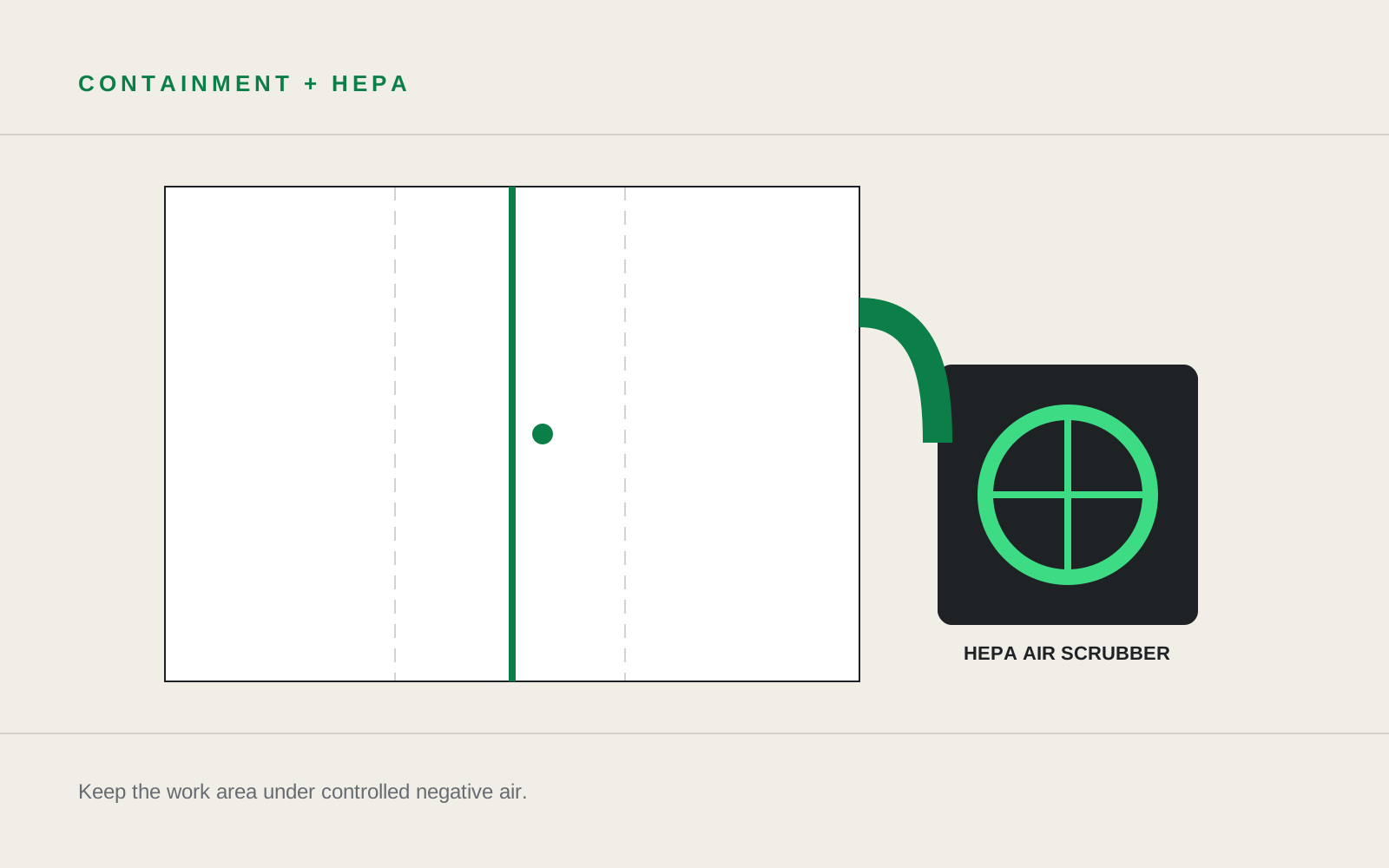
The work itself follows the same order every time. Seal off the area with plastic and put it under negative air so spores don't ride through the rest of the house. Pull out what can't be saved: wet drywall, carpet pad, insulation. Clean what can: framing, subfloor, and masonry get HEPA vacuumed, scrubbed or sanded, and vacuumed again. Spraying something on the wall and leaving is not remediation, and neither is painting over it.
Basement and Crawl Space Mold
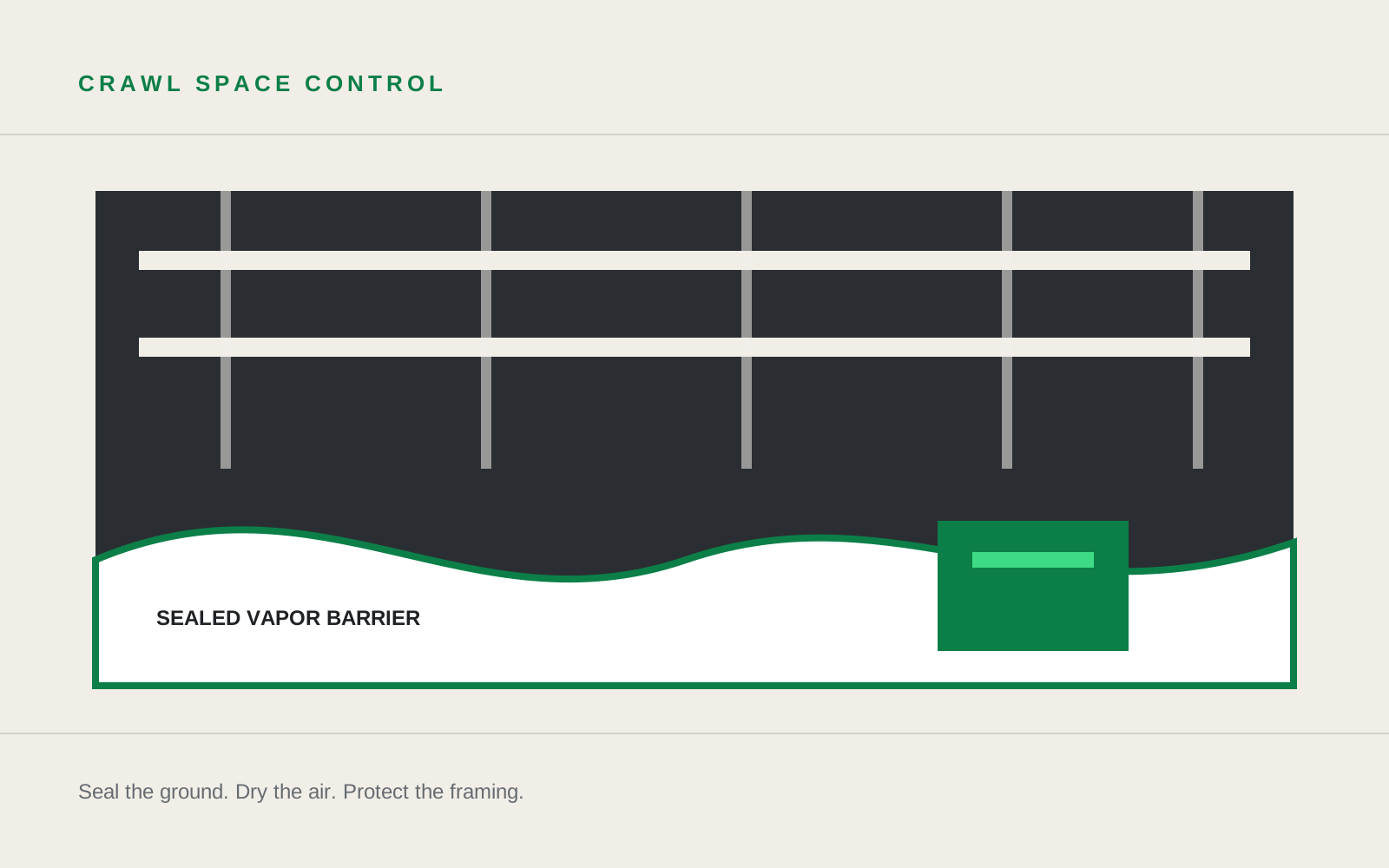
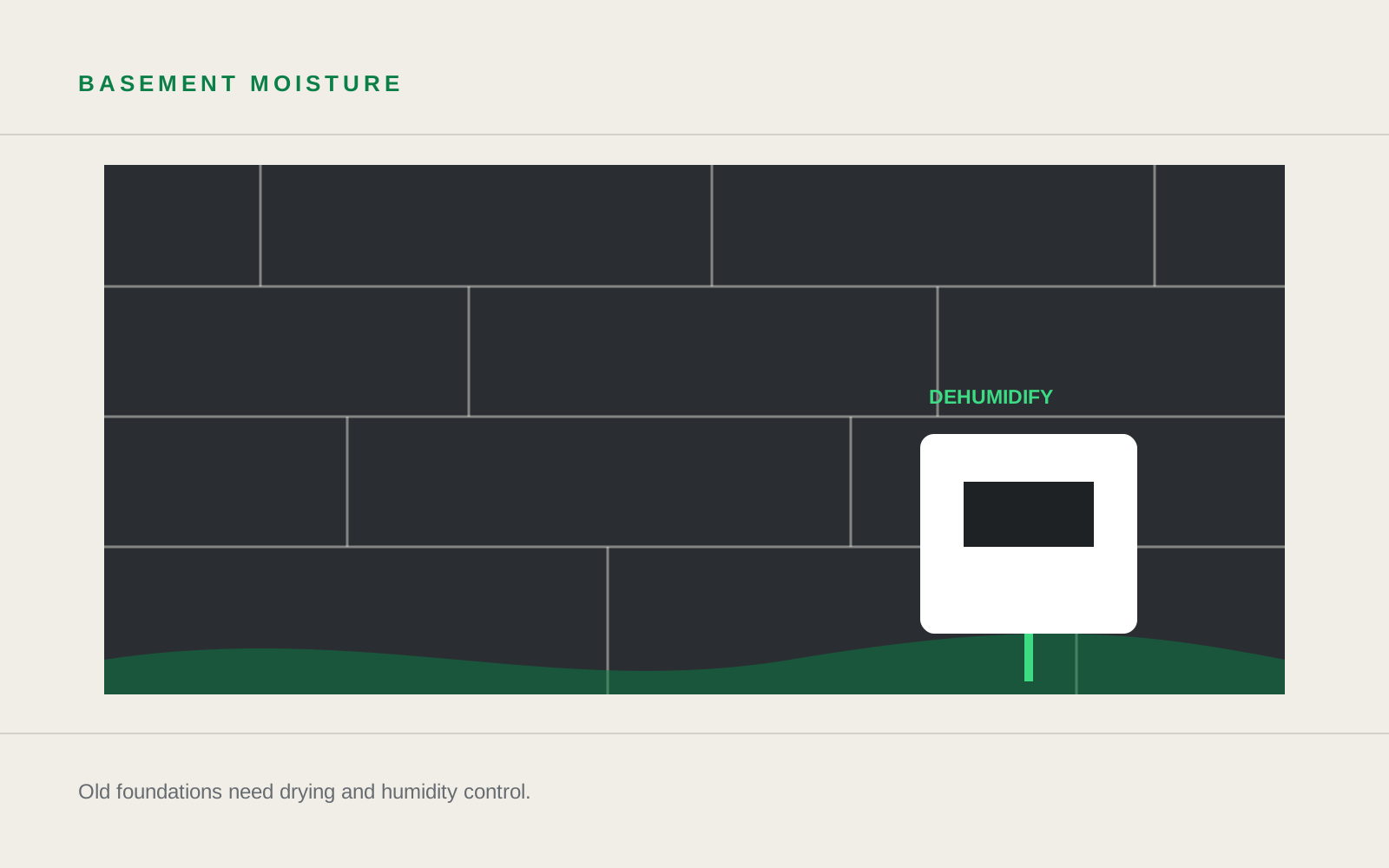
Most of my calls are below grade. Older homes in the borough sit on fieldstone or brick foundations that were never meant to be dry, and the red shale and clay under much of Adams County holds water against a wall for days after a rain. In a crawl space the usual finds are fallen insulation, bare dirt with no vapor barrier, and fuzzy white or gray growth along the joists. Cleaning is half the job. The other half is getting the humidity down so it stays clean.
Attic Mold
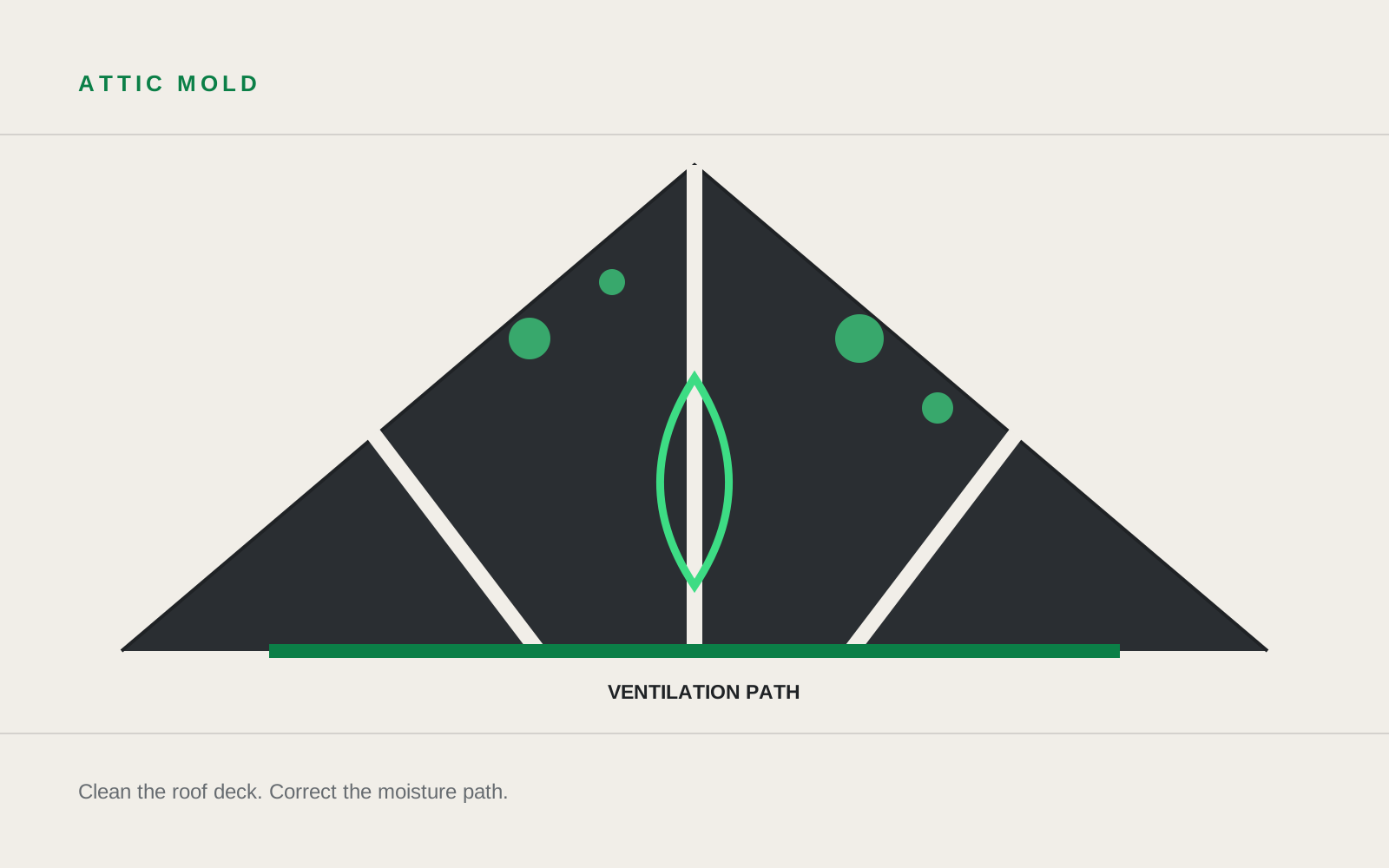
Dark staining on the underside of the roof deck usually shows up in a home inspection, right when nobody has time for it. The cause is almost always warm, wet air from the house getting into a cold attic: a bath fan dumping into the insulation, blocked soffit vents, a leaky attic hatch. I clean the sheathing and rafters, and I show you what fed it so your roofer or HVAC contractor can fix the source.
Water Damage Drying
Mold needs about two days of wet material to get going. After a failed sump pump, a burst supply line, or a storm that pushes water across the basement floor, the clock matters more than anything else. I pull out what's soaked, set air movers and dehumidifiers, and track moisture readings until the framing and slab are back to normal. Dry it fast enough and there may be no mold job at all.

Post-Remediation Verification
When the work is finished you should be able to see it and measure it. Surfaces are visibly clean, moisture readings are down, and you get photos of what was behind the wall before and after. If you want clearance testing, and you should for a sale or an insurance claim, I'd rather you hire a separate inspector to do it. A company that grades its own work has a reason to pass.
How to tell which service you need
Start with where the problem is and what caused it.
- Musty smell, nothing visible: an inspection with moisture mapping.
- Visible growth on drywall, framing, or joists: remediation, scoped after a look.
- Water on the floor right now: drying, today if possible. Mold comes later if the water stays.
- A home inspector flagged the attic or crawl space: a written assessment you can share with the other side of the deal, then the work if it’s needed.
What these jobs have in common
Containment goes up before anything moldy gets disturbed. Air scrubbers with HEPA filters run the whole time. Porous material that’s grown through gets bagged and removed, and what stays gets cleaned down to bare, sound surface. Nothing gets closed back up until the meter says it’s dry.
I don’t sell fogging, ozone treatments, or paint-over coatings as a substitute for that. An antimicrobial or an encapsulant has its place at the end of a proper cleaning. On its own it just hides the problem from the next person who opens the wall.
Household habits that keep a basement wet
Some of what I find has nothing to do with the foundation.
- Cardboard boxes, old rugs, and lumber stored directly on a concrete or dirt floor. Cardboard is mold’s favorite food and it wicks moisture straight up.
- A dryer or bathroom fan venting into the attic or crawl space. Every load of laundry puts water into the framing.
- Air conditioning and dehumidifiers switched off for a two-week vacation in July. The house can grow a visible problem in that time.
- Drywall hung straight against a foundation wall with no vapor or thermal break behind it.
- Uninsulated ductwork running through a crawl space or attic. It sweats all summer and drips on whatever is below.
- A crawl space ground cover that’s torn, short of the walls, or missing. Bare soil gives off moisture around the clock, and a continuous 6-mil polyethylene sheet is the minimum fix.
I’ll point these out during the assessment. Several cost nothing to change.
Things outside my lane
I’m a mold contractor. When the moisture source is a roof leak, a cracked drain line, or a grading problem, I’ll show you what I found and you’ll want a roofer, plumber, or excavator to fix it. I’d rather point you to the right trade than take on work someone else does better.
Back to the mold remediation overview or send a message about your house.
Service questions
Do I need mold testing before remediation?
Usually not. If you can see it or smell it, you have it, and the lab won't tell you anything that changes the cleanup. Testing earns its cost when there's a smell and no visible source, when someone in the house has a health concern and a doctor wants to know what's present, or when a real estate deal or insurance claim needs paper.
How long does a typical job take?
A contained section of basement wall is often a day or two of work plus drying time. Full crawl spaces and attics run longer, and drying depends on how wet the structure is and the weather. I give you a schedule with the estimate and tell you if the moisture readings change it.
Do we have to leave the house during the work?
Most of the time, no. Containment and negative air are there so the rest of the house stays livable. If the work area includes the only bathroom or the HVAC system has to be shut down in extreme weather, we'll talk about it ahead of time.
Will the mold come back?
It will if the water does. Clean framing in a crawl space that still runs damp all summer will grow again within a season or two. That's why every job here ends with a moisture source named and a plan for it, whether that's a dehumidifier, a downspout extension, or a call to a plumber.
Do you work on rental and commercial properties?
Yes. Between the college, the tourism trade, and the old building stock downtown, Gettysburg has a lot of rental housing and small commercial buildings with the same stone basements the houses have. Landlords get the same photo documentation, which helps when a tenant has raised a complaint.
Describe the problem and I'll sort it out
(717) 837-3115Request a mold assessment- Locally owned in Gettysburg
- Four years in business
- Independent, not a franchise